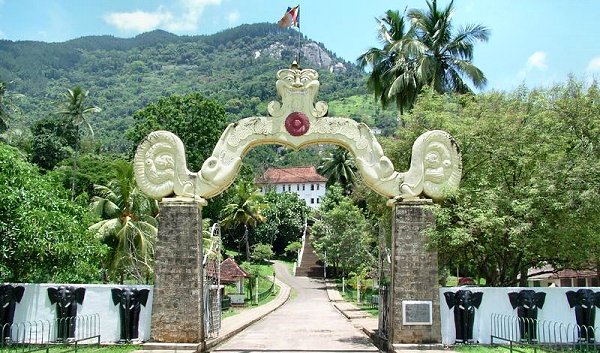
 Photo: Zsandeep · CC BY-SA 3.0 · Wikimedia Commons
Aluvihare Rock Temple
Verification: in review · Coordinates: unverified
What is this site?
Historic rock-cleft cave monastery where the Theravada Buddhist Tripitaka was first committed to writing on ola palm leaves in the 1st century BCE.
Why it matters
The scriptural cradle of global Theravada Buddhism, ending millennia of oral transmission (*Muka-Patha*).
Description
During a catastrophic twelve-year famine (Beminitiya Seya) under King Valagamba, 500 scholarly monks convened at Aluvihare to transcribe the entire Pali canon. Associated patrons (as supplied): King Valagamba, Council of 500 Arahants. Key features to look for: Ola leaf scriptorium and palm-leaf manuscript preservation vaults; Chasm-like rock crevices sheltering the cave sanctuaries; Ancient Brahmi epigraphs carved into the cliff faces; Terraced summit cetiya overlooking the Matale valley.
Then & now
Drag across the photo to compare a historical photograph with today.
 Then · 1896Now
Photos
Historical and scholarly sources
- Reference as supplied in project dataset (pending verification): Antiquities Register Schedule 01
Visiting responsibly
Dress modestly at religious sites, remove shoes and hats where requested, never climb on monuments or pose with your back to Buddha images, and follow guidance from custodians and the Department of Archaeology.